
Comprehensive School Counseling: Four Components
Define
The DEFINE component establishes the foundation for the role of the school counselor. It builds a shared understanding among counselors and leaders that aligns the program with district, state, and professional standards and expectations. It ensures all are working from the same definition of why the program exists and what success looks like.
It consists of established beliefs, vision, mission, and professional standards for the school counseling program and for school counselors.
Manage
The MANAGE component provides the organizational tools, processes, and systems that ensure a counseling program is intentional, data-driven, and aligned with district goals. This component reflects the portion of counselor time allocated to program planning and management (20%) as outlined in the 80/20 school counseling model.
This component consists of program planning and resource mapping, calendars, use of time analysis, goal setting/action planning.
Deliver
The DELIVER component describes the methods school counselors use to provide activities and services to students and for students.
This component consists of two broad categories: direct and indirect student services.
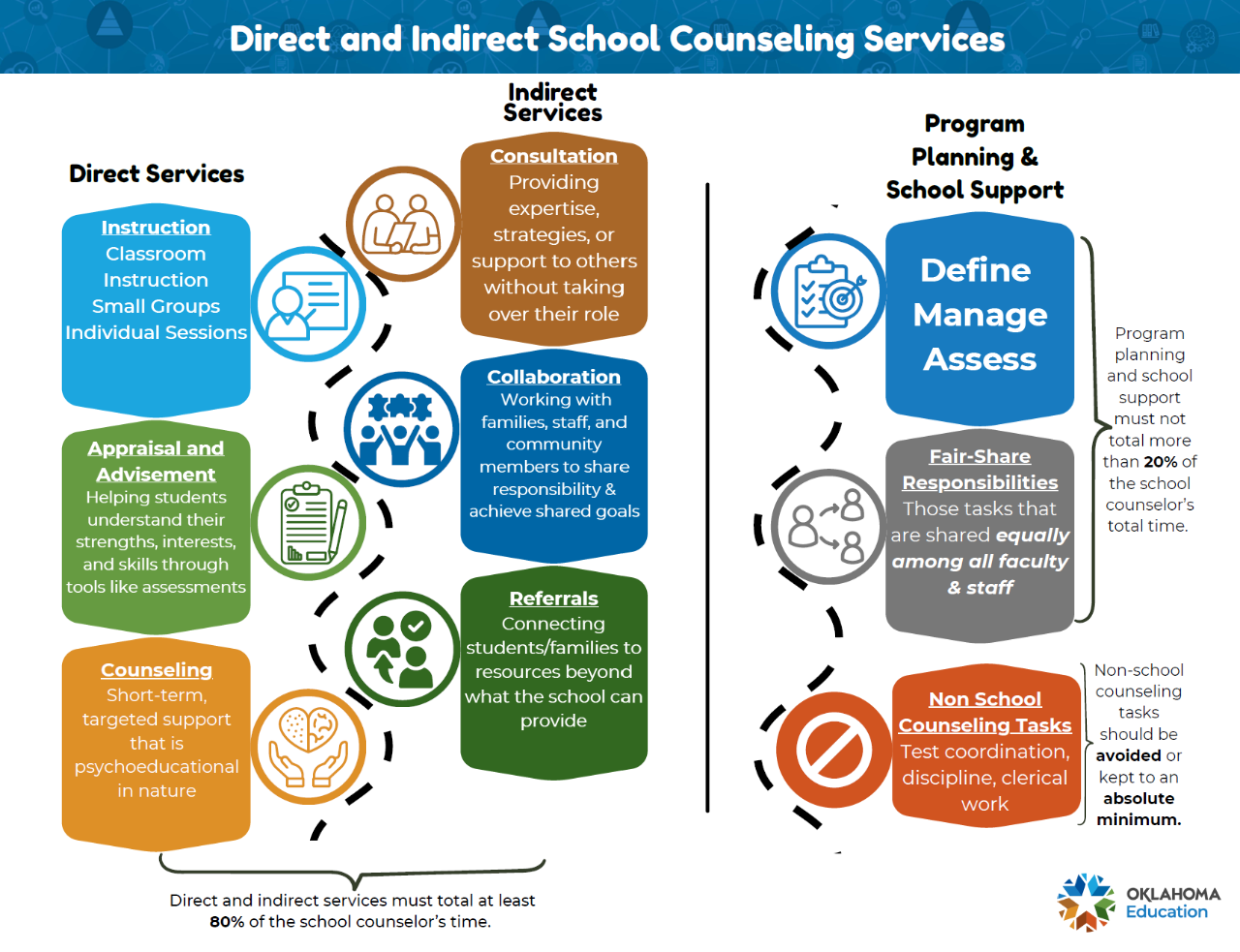
This graphic defines direct and indirect school counseling services and clarifies how counselor time should be used under the 80/20 rule. It helps districts identify which activities count toward the 80% of time spent on student-centered services and which tasks should be limited, shared, or avoided to ensure a comprehensive, compliant school counseling program.
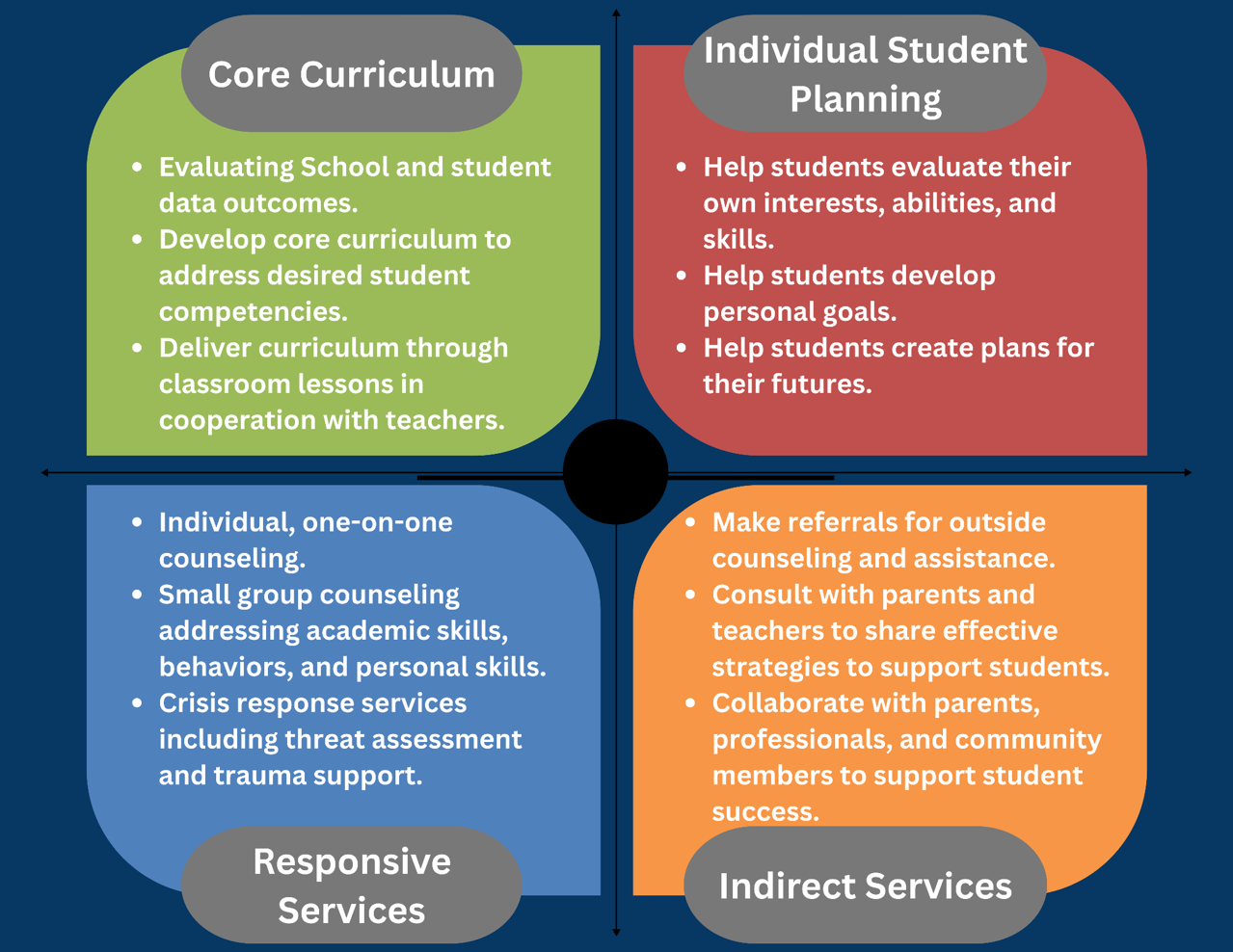
This graphic illustrates four primary areas of service within a comprehensive school counseling program—Core Curriculum, Individual Student Planning, Responsive Services, and Indirect Services. Together, these areas of service show how school counselors deliver preventive, developmental, and responsive supports to meet student academic, career, and personal development needs through direct and indirect services.
Assess
The ASSESS component establishes how the effectiveness of the comprehensive school counseling program is measured. It builds a shared understanding among counselors and leaders of how data are used to evaluate impact, guide decision-making, and drive continuous improvement. It ensures the program is accountable, transparent, and focused on student outcomes rather than activities alone.
It consists of the systematic collection, analysis, and use of data to monitor student progress, evaluate program effectiveness, and inform ongoing program improvement.