
Smoke Management
Where there's smoke...
DEQ’s open burning rule allows the use of fire for land management operations (OAC 252:100-13-7) if procedures recommended by the Oklahoma Department of Agriculture, Food, and Forestry (ODAFF), the Oklahoma Department of Wildlife Conservation, and the US Forest Service are followed. Prescribed burning is the strategic application of fire by an experienced fire crew to a predetermined area for land management.
DEQ worked with Oklahoma Forestry Services (OFS), a division of ODAFF, to develop a Smoke Management Plan (SMP) to protect the health and welfare of Oklahomans from the impacts of smoke from wildland and prescribed fire. The SMP is designed to protect public health and safety, minimize smoke intrusions, and meet state and federal requirements.
The SMP was updated in collaboration with ODAFF and input from stakeholders during a public review comment period ending May 12, 2021. The final updated documents were submitted to EPA on July 14, 2021, and can be found below:
- Smoke Management Plan (Updated June 2021)
- Response to Comments

Historically, Oklahoma’s landscape has been shaped by many processes. Fires caused by lightning promoted cross-timbers and tallgrass prairie habitats. Recognizing the benefits of fire on the land, Native Americans began a practice of periodic burning. However, for over a century, fire suppression was encouraged by society and resulted in fuel buildup and the spread of invasive plant species. Unhealthy forests and prairies led to large catastrophic wildfires, loss of wildlife due to unsuitable habitats, loss of tourism, and insect infestation of vegetation and animals.
To combat detrimental impacts, landowners began to utilize prescribed fires. Prescribed fire is an effective, low-cost land management tool essential to the restoration and perpetuation of native plant communities and the wildlife that inhabit them. Also, prescribed fire helps decrease the severity of wildfires by reducing available fuel.
Fire Frequency
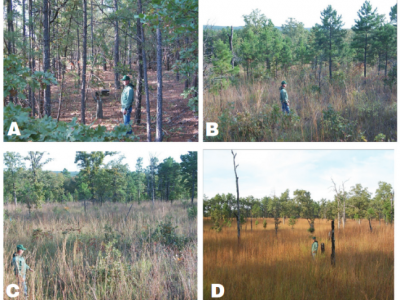
Fire frequency is key to land management.
Burn frequencies:
- A – no burn
- B – three-year
- C – two-year
- D – one-year
Images credit Oklahoma State University
Fires can happen anytime and anywhere in Oklahoma, but usually fire/smoke season is in the spring and fall, which coincides with ozone season (March through November). The largest prescribed fires are in Oklahoma’s southeastern forests and the northeastern tallgrass prairie. The tallgrass prairie around Osage County is part of the Flint Hills region, which extends north into Kansas.
Satellite Imagery of Smoke Plumes from Oklahoma and Kansas

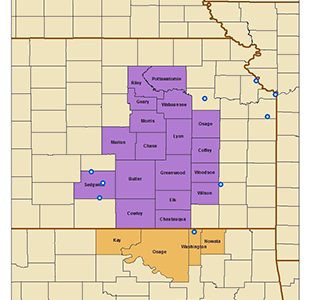
Oklahoma and Kansas Flint Hills Counties shown in purple and orange county map.
Smoke contains air pollutants such as particulate matter (PM) and precursors to ozone. PM and ozone have National Ambient Air Quality Standards (NAAQS), and DEQ operates monitoring stations for both pollutants around the state.
Under certain conditions, prescribed or wildland fires can affect air quality and result in an “exceptional event.” In 2016, EPA finalized revisions to the Exceptional Events Rule. Currently, all of Oklahoma is designated in attainment with all NAAQS standards. If an Oklahoma air quality monitor registers an exceedance of the ozone or PM NAAQS, the exceedance may lead to a nonattainment designation. If the exceedance was due to the impacts of a prescribed or wildland fire, DEQ would flag the data from times when smoke impacted the monitor. After a notice and opportunity for public comment, DEQ would also submit documentation to justify the exclusion of the data, and EPA would decide to concur or not with each flag.
Public Health
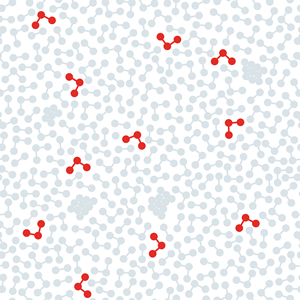 Ozone Molecules
 Particulate Matter Molecules
PM2.5 is fine particulate matter consisting of particles and droplets 2.5 micrometers or smaller in width, finer than a human hair. PM2.5 can reach deep in the lungs and enter the bloodstream.
Ozone is an unstable gas made of three oxygen atoms (O3). Ozone is created by reactions between oxygen and ozone precursors in the presence of sunlight.
PM and ozone exposure can negatively affect the lungs and heart, which may lead to:
- irritation of the respiratory system
- decreased lung function
- coughing or difficulty breathing
- irregular heartbeat
- heart attacks
- premature births and deaths
- asthma
DEQ issues air quality health advisories when pollutant levels become unhealthy for sensitive groups. To learn more about the NAAQS and the advisory program, visit the Ambient Air Monitoring page.
Burn Managers Can Reduce Smoke Impacts
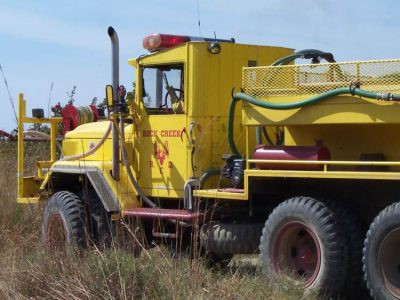
Smoke management is critical to a successful prescribed burn, and smoke impacts are the responsibility of the land owner or manager. The Oklahoma Prescribed Fire Council (PFC) helps land owners and local citizens establish Prescribed Burn Associations (PBAs). PBA members share the cost of purchasing tools and help each other with prescribed burns, which can limit liability. Also, members attend workshops to learn the latest technology practices.
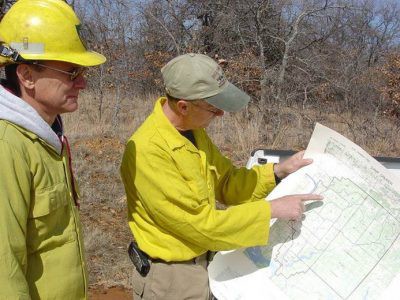
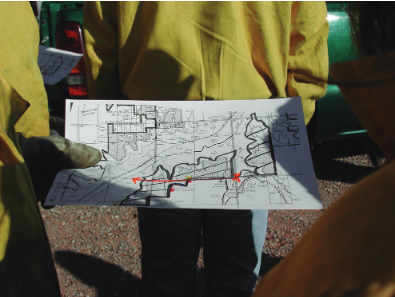
Safe and effective burns use Basic Smoke Management Practices (BSMPs) for success:
- Evaluate weather conditions before, during, and after the burn.
- Monitor effects of fire on air quality to ensure proper dispersion.
- Record BSMPs used and fire activity with a burn plan.
- Communicate with and notify authorities and affected public before and during the prescribed fire if conditions change.
- Use emission reduction techniques like wood chipping, grazing, hay baling, and patch burning.
- Collaborate with neighbors, and other land owners in conducting prescribed burns by joining a PBA.

Resources
If you have any questions, please contact Melanie Foster of the Air Quality Rules and Planning section by phone at 405-702-4100. To report an open burning complaint, please contact our Environmental Complaints Program by submitting an online complaint form or calling 1-800-522-0206.
- Oklahoma Forestry Services (division of ODAFF) – burn bans, current wildfire info, and more
- Oklahoma Prescribed Fire Council – support for prescribed burning
- Oklahoma Prescribed Burn Association – membership, burn forms, training, equipment
- AirNow Fire and Smoke Map – current smoke plume and monitoring data/locations
- OK-FIRE – weather, fire prescription planner, burn ban map
- Kansas Flint Hills Smoke Management – resources on smoke and burning in the Flint Hills
- Flint Hills Smoke Tool – model for potential smoke impacts in the Flint Hills
- US Forest Service Smoke Management Guide – for prescribed and wildland fires
- National Weather Service
- Oklahoma Air Quality Rules (OAC 252:100) – see Subchapter 13 on open burning
- Oklahoma Prescribed Fire Statutes – burning within the law
