
Owls
Barn Owl
Seasonal Restriction Dates:
- December 15 - July 15
Restriction Notes:
- Only if observed on a structure.
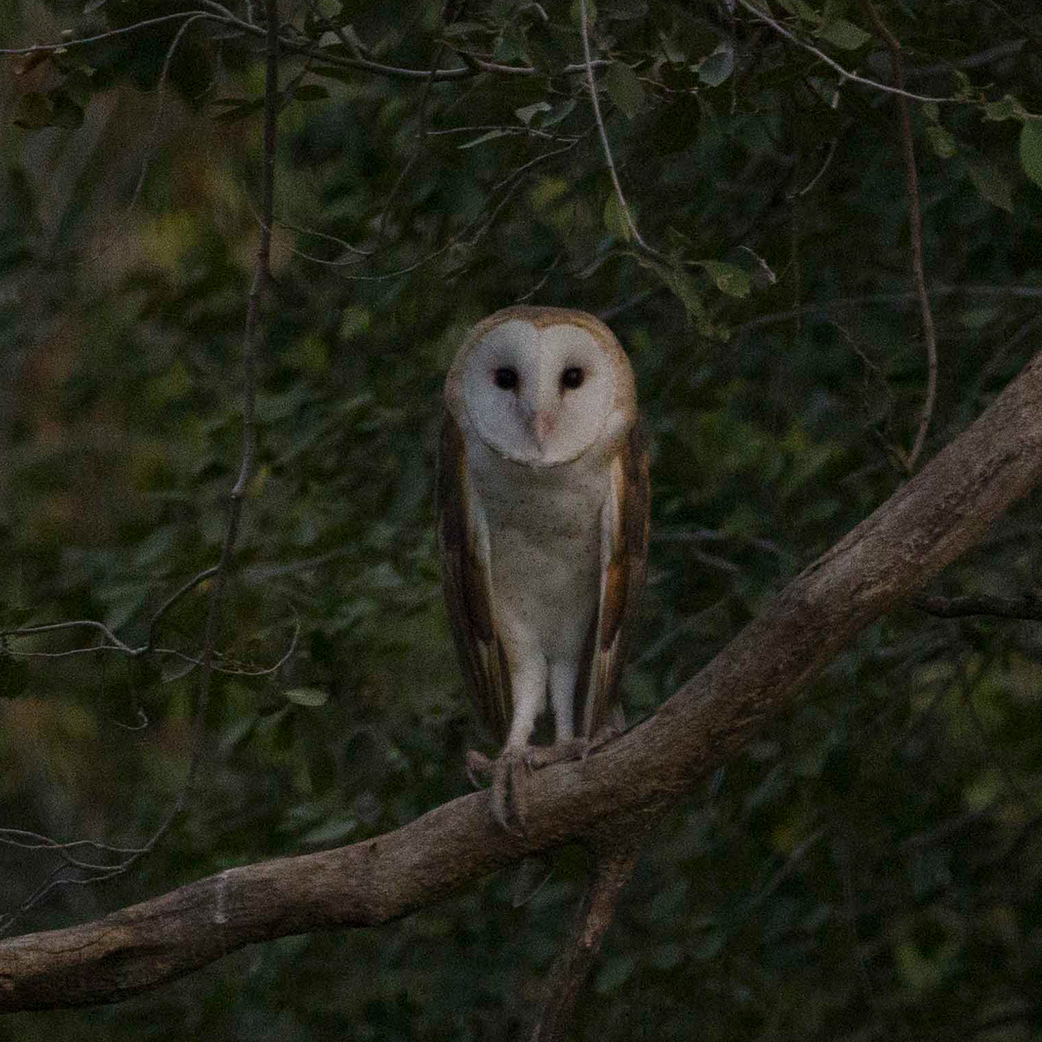
Photo Credit: James R. Soto
Identification tips from Oklahoma Department of Wildlife Conservation:
The distinct face of the Barn Owl (Tyto alba) is recognized around the world. In fact, one is as likely to spot the white, heart-shaped face in Oklahoma as in Africa, or even Australia. The barn owl is one of the most wide-spread of all land birds. They are found on all continents (except Antarctica) and even on many large, oceanic islands. In Oklahoma, as in across their cosmopolitan range, barn owls can be found in mixed grasslands or open forests and they are often found in close association with man.
Natural Habitat:
Hollow trees, rocky cliffs, abandoned nests.
Man-made Habitat:
Barns, grain silos, steeples.

Barred Owl
Seasonal Restriction Dates:
- December 15 - July 15
Restriction Notes:
- Only if observed on a structure.

Photo Credit: USFWS
Identification tips from the All About Birds identification website:
The Barred Owl (Strix varia) is fairly large, with dark eyes and a yellow bill. Buffy below with dark streaks, and brown on the back with white mottling.
Natural Habitat:
Hollow trees, rocky cliffs, abandoned nests
Man-made Habitat:
Barns, grain silos, steeples.

Great Horned Owl
Seasonal Restriction Dates:
- December 15 - July 15
Restriction Notes:
- Only if observed on a structure.

Photo Credit: James R. Soto
Identification tips from the All About Birds identification website:
The Great Horned Owl (Bubo virginianus) is a large owl with large ear tufts and yellow eyes. The color of the facial disc varies regionally from gray to cinnamon.
Natural Habitat:
Hollow trees, rocky cliffs, abandoned nests.
Man-made Habitat:
Barns, grain silos, steeples.