
Eagles
Bald Eagle
Seasonal Restriction Dates:
September 16–May 31
Restriction Notes:
- If nesting habitat present 660 ft to 0.25 mi from footprint and nesting activities could be impacted.

Adult Bald Eagle
Photo Credit: ODWC
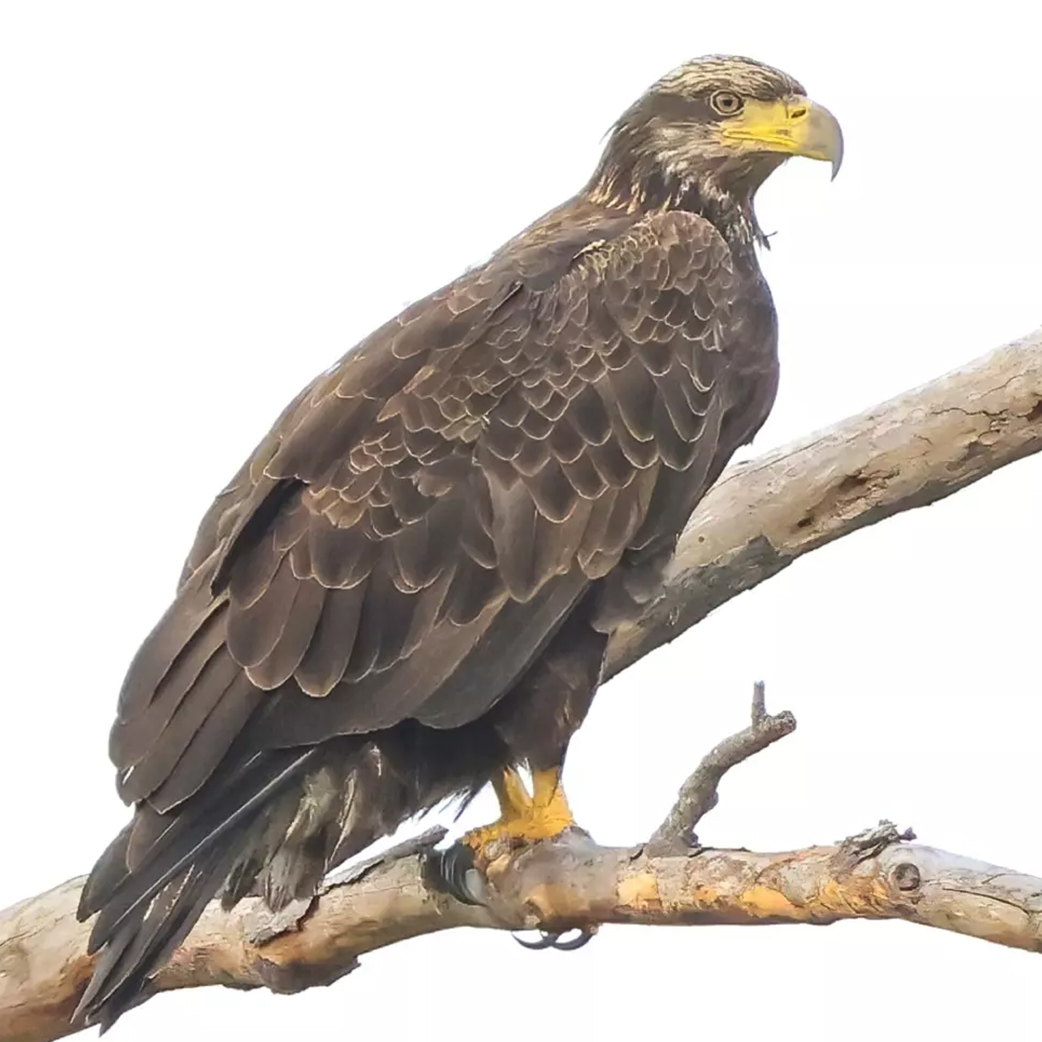
Juvenile Bald Eagle
Photo Credit: USFWS
Identification tips from Oklahoma Department of Wildlife Conservation:
The bald eagle (Haliaeetus leucocephalus) has been a symbol of the United States since 1782. Most Americans are familiar with this bird that appears on currency, logos and seals but know little about the bird itself.
Both male and female mature eagles have identical coloring and can be easily recognized by their white head and tail. Young eagles are almost completely brown, easily confusing them with a mature golden eagle, which is the only other wild eagle species found in the United States.
Natural Habitat:
Wide variety of grasslands, forests, and rural environments with high densities of mammals and birds.

Golden Eagle
Seasonal Restriction Dates:
- N/A
Restriction Notes:
- If nesting habitat present within 660-ft and nesting activities could be impacted.

Photo Credit: USFWS
Identification tips from Oklahoma Department of Wildlife Conservation:
The golden eagle (Aquila chrysaetos) is a raptor that ranges over mountains and grasslands of primarily the western United States. These majestic birds may occasionally be spotted riding air currents and gliding with wings stretched wide while wintering in Oklahoma.
Golden eagles were given their name because of their golden-brown feathers on their head and necks. As adults, coloration is an easy way to tell them apart from the more famous bald eagle. However, the juveniles of both birds can be easily confused. The easiest way to tell young golden eagles from bald eagles is to look for a band of white along the golden eagle's tail feathers.
Natural Habitat:
Desert, grassland, and tundra, within large trees (i.e. cottonwoods) or cliffs (nesting is rare in Oklahoma)