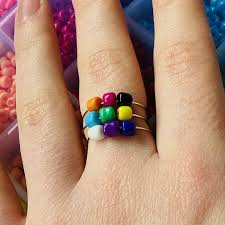
WHAT IT SUPPORTS / WHO IT HELPS:
DIY fidget rings support grounding, fine motor engagement, and quiet sensory input. They can be especially helpful for people who need something small and discreet to keep their hands busy during stressful moments, transitions, meetings, or times when sitting still is hard.
These can help support:
- grounding during stress or overwhelm
- focus and attention
- quiet self-regulation through repetitive movement
- redirecting restless hand movements like picking, tapping, or fidgeting
- calming the body without drawing attention
They may be especially helpful for:
- children, teens, and adults who benefit from tactile sensory input
- neurodivergent individuals who use repetitive movement to stay regulated
- people who need a quiet fidget option for school, work, appointments, or public settings
- anyone who feels more regulated when their hands have something to do
MATERIALS NEEDED:
1. Ring Base - use one of the following:
- keychain split ring
- small binder ring
- another small ring that closes securely
2. Beads/ Add-ins:
- smooth beads
- textured beads
- metal beads
- wooden beads
- silicone beads
3. Optional:
- small rubber O-rings for extra resistance
- different bead textures for more sensory variety
- larger beads for easier grasping
HOW TO MAKE IT:
The goal is to create something that feels good in the hand and gives quiet, satisfying sensory input. There are many ways to do this and each person is different, so experiment and find what you or your child responds best to.
- Open the ring.
- Slide on 3–5 beads.
- Add rubber O-rings between beads if you want extra resistance or texture.
- Close the ring securely.
- Roll the beads with your fi ngers and see how it feels.
- Adjust the bead size, number, or texture if needed.
HOW TO USE IT:
Roll the beads with your fingers during transitions, meetings, class, waiting periods, or stressful moments. You can:
- keep it in a pocket, purse, backpack, or desk
- use it during moments when your hands need something to do
- pair it with deep breathing or another calming strategy
- use it as a quiet alternative to tapping, picking, or other restless hand movements
ACCESSIBILITY NOTES:
- Use larger beads for individuals with lower dexterity or fine motor difficulty
- Avoid metal beads for individuals who are sensitive to temperature
- Use lightweight materials if hand fatigue is a concern
- Choose smoother beads for more predictable sensory input
- Choose textured beads or O-rings for those who benefit from stronger tactile feedback
SAFETY NOTES:
- Adult supervision is needed during assembly
- Small beads may be a choking hazard for young children
- Make sure the ring closes securely so beads do not come loose
- Check it regularly for wear or damage if it is used often
WHY MESKE RECOMMENDS THIS WIGGLE:
I recommend fidget rings because they are simple, quiet, portable, and easy to customize. They give people a way to keep their hands engaged without needing a large or obvious tool, which can make a big difference in school, meetings, appointments, or other public settings. They are low-cost, easy to make, and can be adapted for different ages and sensory needs.