Health Care Workforce Training Commission
Placing Doctors in Rural & Underserved Communities – Partnering With Health Care Workforce Training Commission
TSET is committed to improving the health of all Oklahomans and recognizes the critical need for physicians in rural and medically underserved communities. Oklahomans in these communities often delay seeking medical treatment until it is too late and often don’t seek preventative treatment. To improve access to medical services in rural Oklahoma, TSET partners with the Health Care Workforce Training Commission (HWTC, also formerly known as PMTC) to support the Medical Loan Repayment Program (MLRP).
The burden of medical school debt can prevent physicians from practicing in rural or underserved areas. The MLRP combats the physician shortage in rural Oklahoma by addressing a physician’s medical school debt so physicians can practice in rural and underserved communities. Physicians graduating from medical school have an average of nearly $200,000 in debt according to data from the Association of American Medical Colleges. MLRP loan repayment participants often have loan amounts in the $300,000 range.
Through an agreement with the HWTC, TSET has committed to funding 52 slots and provides 40% of the total funding for each TSET sponsored physician — making it one of the largest contributors to this public/private collaborative partnership. TSET funds are matched by both public and private entities to ensure physicians are placed in communities with the most need. Public and private partners include hospitals, cities, insurance providers, medical associations and banks.
“The Oklahoma Medical Loan Repayment program brings public and private entities together to support rural and medically underserved parts of our state. The program adds to the state’s rural health infrastructure and supports Oklahomans in making healthier choices and managing their health.”
Julie Bisbee, TSET Executive Director


HEALTH IMPACT
Through the Medical Loan Repayment Program, 52 physicians are currently practicing in Oklahoma’s rural and underserved areas. Since the program began in 2013, doctors have provided more than 667,000 patient visits. Of those, more than 175,000 were with SoonerCare patients, and more than 17,000 patients overall have been referred to the Oklahoma Tobacco Helpline.
“The Physician Loan Repayment Program aligns closely with TSET’s mission by addressing healthcare disparities through strategic support for physicians serving rural and underserved communities. By easing the financial burden of medical education, this program helps attract and retain quality healthcare professionals where they’re needed most, ultimately improving long-term health outcomes for all Oklahomans.”
Kami Fullingim, PMTC Executive Director
ECONOMIC IMPACT
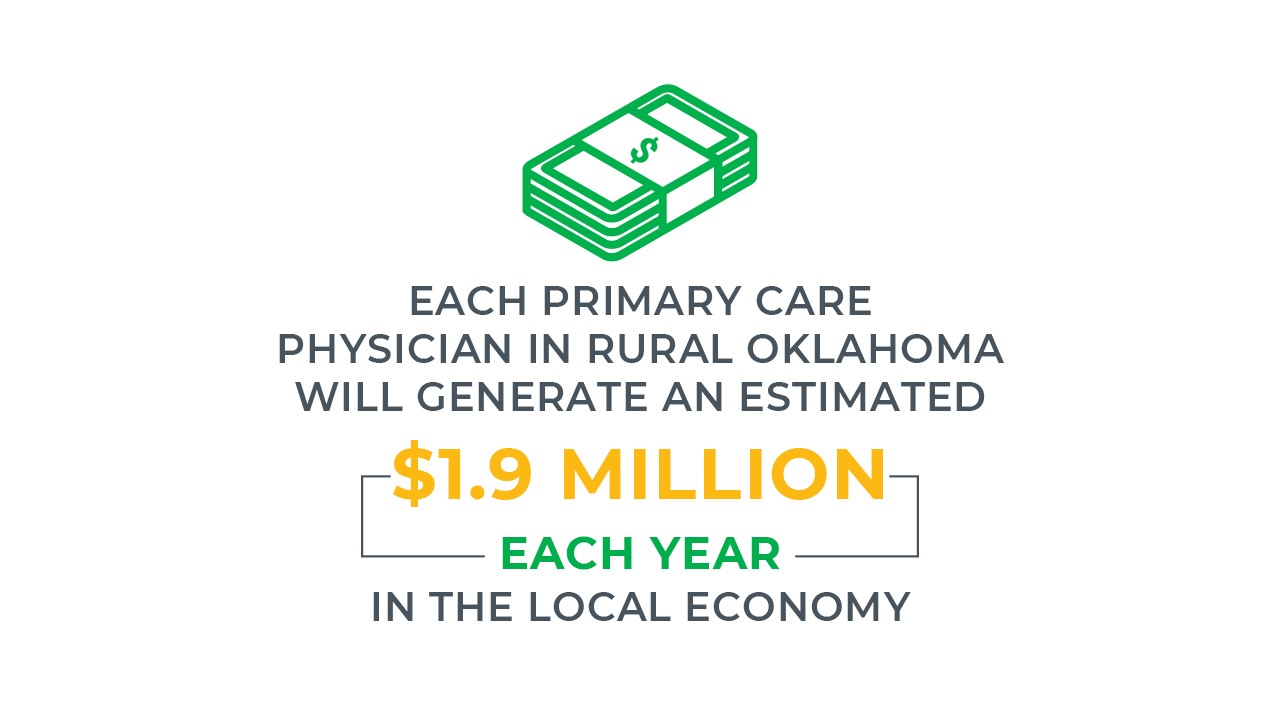
According to the American Medical Association, a physician in Oklahoma supports 11.7 jobs on average and $1.9 million in annual economic activity in his or her community.
UNDERSTANDING THE NEED
Physicians graduating from medical school have an average of nearly $200,000 in debt according to data from the Association of American Medical Colleges. HWTC (formerly known as PMTC) loan repayment participants most often present loan amounts in the $300,000 range. The burden of medical school debt can sometimes prevent physicians from practicing general medicine or working in rural or underserved areas.
PHYSICIAN COMMITMENTS
With participation in the program, doctors must live in the surrounding community placement for four years, agree to practice, see SoonerCare patients, accept Medicare billing, be trained on best practices to talk to a patient about quitting tobacco use and refer patients to the Oklahoma Tobacco Helpline.
Participating physicians include:
- Family Medicine
- Geriatrics
- General Internal Medicine
- General Pediatrics
- Obstetrics
- Gynecology
- Emergency Medicine