

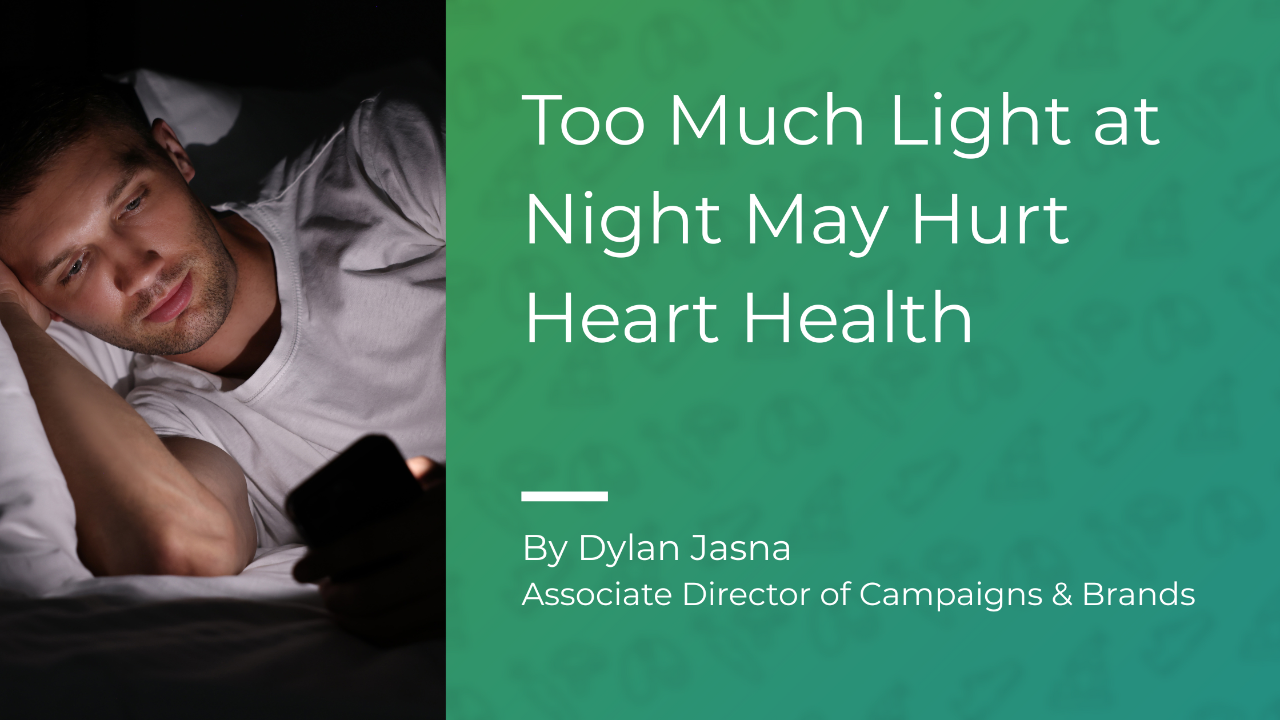
A new study shows that too much light at night may raise the risk of heart disease. The study, published in JAMA Network Open on Oct. 23, 2025, followed nearly 89,000 people for eight years. It found that people exposed to the most artificial light at night, such as from streetlights, TVs or phones, had a much higher risk of heart problems than those with the least exposure.
Researchers believe that light at night may affect the body’s natural clock. It can also interrupt sleep, reduce melatonin levels and raise blood pressure. All of these can increase the risk of heart disease.
Not all light is the same. Blue light, such as light from phones and TVs, may cause more harm than other kinds of light. Even dim light in your bedroom could have an impact over time.
This research supports earlier findings. It also suggests that young people and women may be more sensitive to nighttime light. Experts say that lowering light at night could help protect heart health.
Creating a healthy bedtime routine can help your body and brain wind down. That includes dimming the lights, turning off screens and sticking to a regular sleep schedule. Shape Your Future, a program of TSET, offers simple tips to help you sleep better at night.
To learn more about the study, visit JAMA Network Open.